Showing posts with label perspective. Show all posts

Friday, May 9, 2014

Mom Always Said...

Dotty Coleman & Dawn Coleman Gannon
As a child, I listened to what my mother said – sometimes.

However, as I have gotten older, I often find myself hearing her speaking inside my head when faced with specific circumstances in business and in life.

So, in honor of Mother’s Day this weekend, I’ll share the few words of wisdom from Mom that seem to come to mind most often for me, and apply them to business.

Honesty is Always the Best Policy – Even When It Hurts.
In business, honesty is always the best policy. But how far does honesty need to go when dealing with competitors and others whose focus is not the growth of your business? How much truth do you tell? Is not telling everything you know about a specific topic, project or program honest or even ethical?

I agree that honesty and transparency is always the best policy, but I also realize that some people just don’t need to know some things. 

Building and maintaining a reputation for honesty and integrity is fairly simple – you tell the truth, regardless of whether or not the person to whom you are speaking wants to hear it. 

However, once you cross the line of honesty and move into the gray area of half-truths or outright fabrications, regaining that reputation for honesty and integrity will cost you more in terms of time and resources than you can imagine.

I, for one, prefer to conduct business with businesses and organizations with reputations of high integrity.

Think Before You Speak.
Anyone who knows me well will tell you that this is one of the hardest things for me to do.

Many times I hear someone talking, or am reading an email, while at the same time inside my head I am preparing my response so I will be ready to jump out with my words of wisdom when they take a breath. In essence, I am preparing my response based on what I THINK they are saying, when in reality, I am not really LISTENING to what they are saying.

Growing up, my father always said that my brain was 5 steps ahead of my mouth. In support of my mother’s “think before you speak” advice, he was suggesting that I slow down and allow the mouth to catch up to the brain by truly listening to what the other person is actually saying before responding.

As a business owner, I have come to truly understand the value of this advice. After all, how can I provide a service if I don’t fully understand the service my client is seeking? 

One good way to do this is to take notes while listening and then responding by relaying back what you just heard.

For instance, you could say, “This is great! Thank you for asking. Before I respond, let me just ensure that we are on the same page. I heard you say that you need X, Y, & Z and …” This gives you an opportunity to clarify (or catch) information that you may not have heard correctly before moving forward.

Opinions Are Like Belly Buttons – Everyone Has One.
We've all heard this, or used other words in place of belly button. The idea is the same, however. In making business decisions, it is vitally important to consider the issue from as many perspectives as possible – especially those that differ from yours.

I don’t know about you, but every time I make a decision based solely on my perspective, it turns out that I missed something important, and then I have to spend additional time and resources changing course. 

In short, don’t make decisions without examining all the facts and perspectives.

Giving Back is One of the Most Important Things You Can Do.
My Grandmother Levitt,
Dotty Levitt Coleman (my mom),
Me, & Grandma Coleman
at my FCAHS graduation.
When I was in high school at FCAHS in Brooklyn, MS, my mother was a member of the South Central Bell Pioneers Clown Troop. She and her co-workers spent considerable time getting into costume/make up and then driving in a chartreuse-colored Aston Martin to an event for the Special Olympics or another community-focused group.

A few times she picked my sisters and I up from school dressed and driving this car … really.

While you are calming down from busting out laughing at the mental picture the last sentence provided, the important lesson I learned was that giving back to the community and to others makes a huge difference to those to whom you are giving. It also gives you a sense of pride and self-satisfaction.

What does this have to do with business you ask? Corporate social responsibility (CSR) is a term that has grown in prominence and practice in business over the last decade. What does CSR mean for you? 

That’s easy – pick an organization or organizations that align with your business mission and goal, and support it (them) with time, resources and financial contributions.

Not only will the organization(s) benefit, but so will you and your reputation within the community. It’s a win-win for everyone!

As all mothers do, my mother had many other things to say, but for the moment, I think I’ll stop here and wish all you moms a happy Mother's Day.

To those who are still struggling with infertility on your journey to motherhood, I wish you the peace of knowing you are not on this journey alone, and the knowledge that there are many who have been where you are, and are willing to help you (resolve.org & theafa.org).

In closing, please feel free to comment and/or share your own “Mom Always Said…” wisdom.
Before founding her own consulting firm, Dawn Gannon served as a respected project management and administrative operations professional in the military, higher education, and healthcare fields for 25 years. As a Lean/Six Sigma Green Belt, Dawn’s commitment and personal mission to improve the lives of others through service to the community focuses on providing administrative and volunteer management, consumer education, public outreach, event planning, relationship-building efforts, and strategic planning. She is the author of the Management in Motion blog, and has written a number of articles for RESOLVE: The National Infertility Association on the topic of childfree living.

Thursday, April 17, 2014

Who Am I?

“Hi! Dawn Gannon. Nice to meet you!”

“Hi, Dawn. I.M. Fulavet. Nice to meet you, too. What brings you here?”

What brings me here – to this moment – to this event? In other words, who am I?

As business men and women, most of us already know the answer to that question, and those who don’t are struggling to find out. 

For those who do know who they are, have you checked in with yourself lately? Are you really who you wanted to be? 

I’m sure Mr. Fulavet believes he is.


I know this blog has a different tone than most of the others I have written, but the Passover and Easter seasons have struck a different chord with me this year. Both holidays represent freedom from captivity, albeit in different ways. 

Reflecting on the meaning of both has led me to ask myself the following questions:
  • What if I have unknowingly become captive in a persona I would never have wanted or could believe I could be?
  • Is the success of business goals my highest priority? If so, at what cost, both personally and professionally?
  • Have I knowingly stepped on and over others to reach my goals? If so, why would I do that when I have been taught all my life that it is unacceptable behavior?
  • Do I have my priorities straight? Where do my family, friends, and I myself fall within that list, and why are they in that order?

The answers, for me and anyone else, lie in the answer to the question: Who am I, really?

Granted, in business, the sharks generally consume the little fish and are successful simply because they think only of themselves. As a business leader, thinking and planning for the success of your business is also tremendously important.

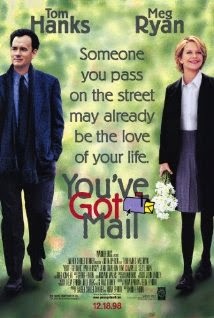
However, in the 1998 version of the movie, You’ve Got Mail, Tom Hanks’ character, Joe Fox, tells Meg Ryan’s character, Kathleen Kelly, that the forced closing of her store is just business; that it’s not personal. But it’s Kathleen’s response to that statement that gets me every time. Click the link below to see the scene.


In other words, making your business successful is a great accomplishment, as long as you don't forget to be personal as well.

So, who am I? Perhaps I should start with being personal and let Mr. Fulavet take care of himself.

To those who celebrate, Chag Pesach Sameach and Happy Easter!


Before founding her own consulting firm, Dawn Gannon served as a respected management professional in the military, higher education, and healthcare fields for 25 years. As a Lean/Six Sigma Green Belt, Dawn’s commitment and personal mission to improve the lives of others through service to the community focuses on providing administrative operations management and strategic planning. She is the author of the Management in Motion blog, and has written a number of articles for RESOLVE: The National Infertility Association on the topic of childfree living.

Sunday, January 5, 2014

If Money Was No Object...

CONGRATULATIONS!! You just won the lottery!!

Wooo hoooo!!!

Now that money is no object for you, what will your organization look like? What will your new wealth allow it to do? What new goals will you set for yourself, and your business?

Most of us are not lucky enough to win a multi-million dollar lottery, and I am sure that your budget and priorities are already set for the year. If not, you better get a move on, my friend!

However, with the New Year comes a wealth of possibilities to choose from; different roads to take to meet your goals. So, why not look at them all from the perspective of “money is no object”?

Don’t get me wrong; I’m not suggesting you SPEND money like you have more than you need. What I am suggesting, however, is that you LOOK at your priorities, plans and programs from a different perspective

Start at the end, rather than the beginning of the process, and work your way back to see how you can get there, and what you will need to do so.

For instance, what would the outreach program you are developing look like if money was no object? How does it function, how many staff are needed to ensure its success, what other resources are necessary, and what partnerships outside your organization have formed as a result? What else do you see that might be relevant?

Be sure to stay within the original parameters of the program. Don’t expand them just because you are looking at it as if you have significant available funding.

Now, take one step back from completion or launch of the program. What do you have right now – within current budget constraints – that will allow you to get there? What do you need to get there that is within your reach today? Do you have, or can you build, a relationship with another organization to provide what you need? Who does it touch? How can they contribute?

Now, take another step back from completion and run the exercise again; ask the same questions and any others that come to mind that will help you see the possibilities, even and especially when money is a huge factor. Based on the original competed or launched program, what new resources or items have been identified, and how can you get them?

Continue taking steps back, one at a time until you reach the initial planning stage. What didn’t you think of when you first began planning? How does that affect your planning now?

Getting back to the notion that money is no object, for most of us this is just not reality. We live and work in a world where every penny counts – literally. 

However, understanding our priorities, plans and programs from a fully-funded perspective helps ensure that we design them well, allows us to adequately plan for the future and find creative ways to meet our goals, regardless of whether or not funding is an issue.

On behalf of Dawn Gannon Consulting, Happy New Year! May this be the year that for you, money is no object.

Before founding her own consulting firm, Dawn Gannon served as a respected management professional in the military, higher education, and healthcare fields for 25 years. As a Lean/Six Sigma Green Belt, Dawn’s commitment and personal mission to improve the lives of others through service to the community focuses on providing administrative and volunteer management, consumer education, public outreach, event planning, relationship-building efforts, and strategic planning. She is also a published author on the topic of childfree living.